Making a Stand for Life and Democracy
- Sophia Hawes-Tingey
- Jul 10, 2024
- 10 min read

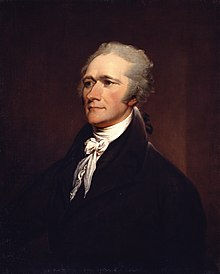
In Alexander Hamilton, by Ron Chernow, Alexander Hamilton had to walk a fine line between honor and conscience even until the end of his life. It is unclear whether Hamilton fired first in his duel with Alexander Burr, but it is clear he meant to throw the first shot away, since he did not believe in duels, but felt compelled to participate.
In Some Desperate Glory, by Emily Tish, Kyr, in a similar vein, follows her honor beliefs until she is struck that what she has done is horrifically wrong on a universal genocidal scale. It’s when she realizes that the trillions of others that Avi just wiped out, while considerably alien, were actually people, too. Kyr, her brother, his friend, and the non-binary majo companion Yiso, have one remaining shot left to prevent a universal level extinction event by a cult formed from survivors of Earth’s decimation due to the warlike nature of the human species.
According to More Stars than Grains of Sand, extinctions of species are happening on a scale greater than previously imagined. Only about 1.4 million of the 20 to fourteen million species have been documented. Less than 1 percent of the species remain that have ever lived on Earth.
In The Woman They Could Not Silence, by Kate Moore, Elizabeth Packard was committed to an insane asylum by her husband, because she refused to silence her religious views which were not in alignment with her husband’s views, and decidedly more abolitionist and more feminist. It is scary how much oppression there was toward women, dissenting viewpoints, and people who did not conform to societal expectations 150 years ago. It is scary how much we can lose if we don’t stand up for our right to be entitled to our own dissenting views and our own lives.
In the news, I heard that the courts in Utah have put a hold on Utah’s attempt to nullify Title IX protections when it comes to transgender students. This is a good thing. The damage to the trans youth community is unthinkable. At this stage, for those who are not despondent, it can make them incredibly angry and not trusting. Please give a hug to your trans youth and let them know you care and will continue to advocate for them.
Universities in Utah are reacting to the ban on equity, diversity, and inclusion programs, with a net result that we are losing a lot of safe spaces on campus for communities of color and LGBTQ+ students. This is a tragedy. It is one of those examples of two steps back, and until we can reestablish University safe spaces, it is up to the community to do so.
I was saddened to see that a 29 year old woman died while kayaking on Little Dell on Thursday, June 4. This is why you should never go adventuring alone, wear your life preserver when kayaking or wind surfing, and keep a safe distance from any dam. I’m assuming she got too close to the dam and got sucked in. She also wasn't wearing her life preserver.
I did some research for EDI priorities an organization may have. Here is a sample of the priorities that you’re organization can choose from:
Closing the Pay Gap
Recruiting Diverse Candidates
Proactively Challenging Racism and Building an Inclusive Culture
Challenging Gender Inequality
Promoting Awareness and Inclusive Practices Around Gender Diversity
Promoting Awareness and Inclusive Practices Around Neurodiversity
Supporting Mental Health and Wellbeing
Preventing Harassment and Discrimination in the Workplace
Removing Barriers to Advance Diverse, Deserving Talent
Providing Guidance and Support on Reasonable Adjustments for Workplace Needs
Increasing Menopause Awareness and Support at Work
Helping to prioritize EDIB priorities in your organization is a great form of civic engagement. From the APA website
“Service-learning and civic engagement are not the same thing in the sense that not all service-learning has a civic dimension and not all civic engagement is service-learning. For definition’s sake, civic engagement is the broader motif, encompassing service-learning but not limited to it. One useful definition of civic engagement is the following: individual and collective actions designed to identify and address issues of public concern. Civic engagement can take many forms, from individual voluntarism to organizational involvement to electoral participation. It can include efforts to directly address an issue, work with others in a community to solve a problem or interact with the institutions of representative democracy. Civic engagement encompasses a range of specific activities such as working in a soup kitchen, serving on a neighborhood association, writing a letter to an elected official or voting. Indeed, an underlying principal of our approach is that an engaged citizen should have the ability, agency and opportunity to move comfortably among these various types of civic acts.”
Community engagement is a cornerstone value that I have inherited. My mother’s father was a Baptist minister that elected to work in communities of color that were frequently avoided and neglected by other ministers in New Mexico. His wife, my grandmother, would help the Latino community with their taxes, and in her later years volunteered in the Deming Senior Center. My mother volunteered to teach special ed students, volunteered at the library, and served on the Board of Commissioners for the local Boy Scout District. She also wrote a letter to Representative Jim Wright in order to keep the local Air Force Base from closing. My father served on the same commission as my mother, served in the Air Force for twenty years, including the Vietnam Era, volunteered as a coach for my little league team, and on icy days, would take his suburban out with chains to pull people out of ditches.
My father once told me that our freedoms are earned, and that every generation has to continue to fight for them. At the time, I thought he was referring to the fact that we seem to face a war every generation. Now I know it goes much deeper than that; when it comes to our civil rights, we “cannot afford to be complacent,” something else my father used to say. So you can say community engagement runs in my family.
One of the first needs I felt drawn to were the message boards at Laura’s Playground, an online trans support forum, where I worked to encourage transgender bloggers to not give up hope. When I first moved to Utah from Kentucky, I eventually created an online support group, naming it Transcenders Social Support Network, so trans people could find support via Facebook. At the end of my first visit to South Valley Unitarian Universalist Society, I was invited to a rally at the Salt Lake City LDS temple complex in support of our LGBTQ+ community. Lying on the ground outside the office buildings with other activists, I felt empowered to belong to a greater movement.
I wound up getting involved with advocacy organizations like Equality Utah, Restore Our Humanity, and the Transgender Inclusion Project. I absolutely loved the activism and staying involved. It wasn’t long before I found myself testifying at the Capitol.
I found myself first running for office in 2014. Since then, I have run quite a few times at both the legislature and city council levels, trying to get a transgender voice to elected office to be in a place to help others understand the transgender community and to work on progressive issues. As a ground-breaking transgender individual this gave me more access to the media than I previously enjoyed when I outed Select Health for their discriminative policies (thanks to a connection at South Valley), when I ran a petition in support of Marriage Equality, and when the media noted the breakthrough of two trans women in Utah being legally married. Since then, there have been numerous media opportunities and I have had the honor of being invited to speak on panels. I have done my best to use my voice for the betterment of our communities.
In 2016, while serving as a National Delegate, I found a sponsor to add two historic planks to the Democratic National Platform I cared deeply about: one affirming the need to support medical care for trans people, and another declaring that religion is not an excuse to discriminate.
After the first time I ran for office, I was asked to join the Utah Stonewall Dems and the Transgender Inclusion Project, two organizations I have the privilege and honor of currently being in leadership roles. I joined and served also with the Women’s State Legislative Council of Utah, and said ‘yes,’ when Brian King asked me if was interested in joining the Board of Directors of ACLU of Utah. I had no idea that today I would be serving as the vice president of the board for such a critical and phenomenal organization. For several years prior to that, I served on the Community Council of Midvale, building and using relationships to advocate for needs in our community.
Recently I started this blog with the intent to help empower more advocates, and as part of the Utah Stonewall Dems, I have been volunteering monthly for almost a decade to help serve breakfast to our homeless youth at the VOA. We have also begun to start having a monthly Queer Coffee to help build our community, supporting our queer-owned businesses.
There are many other important forms of civic engagement. I cannot stress enough the importance and need for voting, philanthropic giving, electoral participation, establishing and strengthening community bonds, and political involvement
This last week, I sent an email to my legislators and Senator Riebe asked for someone to sponsor legislation supporting transportation worker needs. My wife was a trucker and she suffered harm by a certain player in the motor freight industry. My father repaired trailers after retiring from the Air Force, my sister works for an international shipping company, I have a roommate that drives for Swift, and I am a senior software engineer for Worldwide Express, a company that works as a brokerage pairing shippers to customers. I have been with that company going on 10 years now.
I have recently heard that the turnover within the transportation industry is high, with at least one trucking company having a turnover of 200% annually. This means that on average, a truck driver will last six months or less at a company, many of them leaving the industry for good. Truckers don’t have the security and the respect that they once had. With CDL shortages, that means we don’t have enough supply for the demand of goods that need to be shipped across the country or the demand to move shipping containers intermodally. With periodic spikes in shipping times and a rising cost to be continually training new drivers, is it not a surprise that we are seeing a post-covid reduction in transportation. I work for a company that is dependent on helping customers ship their products. We have seen the downturn in the industry. Below are some things that we can do to return some of the respect that our transportation workers need:
End Predatory Truck Leasing: In a predatory lease-purchase. “ a carrier leases a truck to a driver but still possesses control for the majority of the operation. In fact, the carrier is in control of the trucker’s ability to pay off the loan. It is common for drivers to report owing money to the carrier at the end of a pay period…In these instances, the same entity that controls the loan possesses the power to assign loads that will determine whether the driver is able to pay off the loan.” [1] Motor carriers operating within the State of Utah should not be permitted to use bait-and-switch to enter these agreements. Congress established the Truck Leasing Task Force as an effort to end this, and the Owner-Operator Independent Drivers Association is backing their efforts. If a driver purchases a truck for their job as part of a payment program, they should be able to earn equity on the truck for the payments they have made, including the option to purchase loan insurance. My wife, as part of Prime, was subjected to this scheme, and when she got COVID and lost her ability to work according to the company’s medical directors, she wound up losing the truck and everything she put into it, even though she had only a few months left to pay.
Treat Lease drivers as W2 workers: Truck drivers as part of a lease program currently have zero ownership in the truck until the last payment on the lease. However, they are treated as owner-operators, having to pay for all expenses on the vehicle in addition to the payments, obtain their own accounting services, file business tax reports, and select and provide for their own benefits. Since they do not own any portion of the capital, they are not owners, and should be treated as W2 employees
Pro-rate training expenses based on service time: A similar bait-and-switch occurs when companies promise to pay for training. Similar to a lease, the driver is required to complete a minimum time of service (typically years), or be forced to pay for the CDL training. Again, this benefits the carriers, as they control the worker’s wages and get the drivers essentially for free, forcing the disenchanted trucker to stay with the company or forgo their savings. The education funds should be considered earned based on a pro-rated amount of the time of employment, similar to how tuition reimbursement programs work.
Invest in future drivers: Instead of expanding highways and roads in urban areas—which destroys homes and impacts the available housing, UDOT can be filling route and driver vacancies by paying for the CDL training of new bus drivers and rail engineers. A qualified, disenchanted driver should be able to transfer their remaining debt and required service-time to the Utah DOT, continuing to earn back the pro-rated education expense.
Enable secure electronic voting for transportation workers: Universal mail-in balloting is great, but an over-the-road driver who wants to be civically engaged can’t do so if they don’t know in advance where they will be in order to pick up the ballot. That means that interstate transportation workers don’t get a voice in the elections, since their ballots don’t count. We need to add certified transportation workers and out-of-state military members (as a minimum) to the list of people able to submit an electronic ballot during any voting period.
For me, civic engagement is putting myself out there again and again, trying to make a difference wherever I feel needed. It’s standing up for the rights of others, leaving the world a better place than I found it, and encouraging others to do the same. It is a belief that the democratic process offers hope, if and only if we have representatives that will work for the best possible solutions, who will listen with compassion, and do the right thing after truly understanding the impacts their decisions will make. It is about holding our elected officials accountable and responsible, and helping them have more empathy and understanding. It is well-known that there are more perspectives than there are seats at the table. Each perspective still has both a right and a responsibility to be heard. Good decision making happens neither in a vacuum nor an echo chamber.
Coretta Scott King once said, “Women, if the soul of the nation is to be saved, then I believe you must become its soul.”
Per capita, I have found Unitarian Universalists to be more civically engaged than other denominations I have ever been involved with, and it is one of the main reasons why I love my church and call its congregation home.
May you continue to be civically and actively engaged. The soul of our nation depends on it.


Comments